USA's Top Daily Chess News Blog, Informative, Fun, and Positive
hosted by Chess Queen™ & 12th Women's World Chess Champion Alexandra Kosteniuk
Tuesday, April 15, 2014
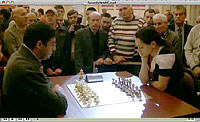
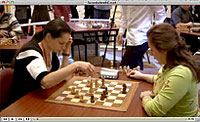
Are Girls Bad at Chess? No, but Stereotypes Affect: Scientific American Report
Hello everyone,
The Scientific American has published a well-written and surely must-read one on whether girls are bad at chess. The writer, Daisy Grewal holds a BA in psychology from UCLA and a PhD in social psychology from Yale University. She currently works at Stanford University as an applied researcher. Grewal has built her articles around the premise of stereotypes influencing behaviour and ability. She writes, "Rothgerber and Wolsiefer surveyed 77 girls between the ages of 6 and 11 and found that the girls showed awareness of the stereotype that boys are better at playing chess than girls. The researchers then gathered and analyzed data obtained from the United States Chess Federation (USCF). The data included information about female players from elementary, middle, and high schools who had competed in twelve tournaments. To control for the possibility that all chess players, both male and female, perform worse when playing against a male opponent, the researchers included a comparison group of young male players."
To test for stereotype threat effects, the researchers needed a way to determine whether girls’ chess-playing ability matches up to their actual performance, when playing against boys. Fortunately, the USCF calculates “preratings” that measure the strength of each player, based on their previous chess performance. The researchers used these preratings to determine an expected winning percentage for each game played by a participant. This expected winning percentage was then compared to a player’s actual winning percentage for each game (100% for a win, 50% for a draw, and 0% for a loss). Because the formula for the expected winning percentage takes into account the preratings of both competitors, failure to achieve an expected win cannot be explained simply by having played against a stronger opponent.
The results showed that when playing against a boy, girls were less likely to achieve an expected win. However, this was only true when they were playing moderate or strong (but not weak) male opponents. Since stereotype threat is supposed to be most pronounced in challenging rather than easy situations, it makes sense that the girls were more likely to falter when playing moderately or very challenging opponents but not weaker ones.
You can read the original article at Scientific American. From Alexandra Kosteniuk's
Chess blog for latest chess news and chess trivia (c) Alexandra Kosteniuk, 2012
Hi everyone,
Chess King showcase returns with a super difficult chess study dating back to 1925 from the #1 podcast www.chesskillertips.com. LEVEL: Difficult CATEGORY: Study White plays and wins. The goal is simple: mate the Black King or win the Black Queen. Check your answer with Chess King.
Intermediate Chess Killer Tip with GM Alexandra Kosteniuk
Chess blog for latest chess news and chess trivia (c) Alexandra Kosteniuk, 2012
Hi everyone,
Chess Killer Tips is our award-winning database of video chess podcasts. How about Chess Queen Alexandra Kosteniuk being the host in your chess class? LEVEL: Intermediate CATEGORY: Study
Scientist Figures on Kaggle Top-10 List With Chess Study
Chess blog for latest chess news and chess trivia (c) Alexandra Kosteniuk, 2012
Hi everyone,
Do you know about Kaggle and why a chess study figures on its list? It is a global leader in predictive modelling competitions. The company has conducted several competitions with major governments, enterprises, and academic clients. More than 33,000 data scientists have contributed to their competitions.
Celebrating their second birthday, Kaggle has released a ranking of its top data scientists and, quite delightfully, chess has mention on that list.
Tim Salimans is sixth on the list of top-10 data scientists released by Kaggle. He is a 26-year-old Ph.D. candidate in econometrics at Erasmus University Rotterdam in the Netherlands. He triumphed in the World Chess Federation (FIDE)-sponsored Deloitte/FIDE Chess Rating Challenge on Kaggle. The task was to predict the outcomes of chess games, thus developing a better ratings system. Saliman’s trick was to create a modified version of the method used by Microsoft to rate Xbox players, a variant that ended up being better than standard ranking algorithm. You can read the full list here.
Human Beings Getting Smarter Every Generation, Says Chess Study!
Chess blog for latest chess news and chess trivia (c) Alexandra Kosteniuk, 2012
Hi everyone,
Grandmaster Andy Soltis, writing in The New York Post, says several years ago, an Australian researcher, Robert W. Howard, studied how the chess ratings of top players escalated over decades — and he concluded that the entire world is just getting smarter. Ratings growth is preliminary evidence that “average human intelligence really is rising,” he wrote.
Ken Regan, an international master and associate professor of computer science at the University of Buffalo, has a more modest goal. He devised a new metric, Intrinsic Performance Rating (IPR), to measure the move quality of great players of the past using the Rybka program.
And, yes, we are getting better at this game. He found, for example, that one of Paul Morphy’s opponents in the first American championship played at a pitiful 1194 level — that is well below today’s average tournament player.
Other findings: When Howard Staunton won the 1843 match that made him unofficial world champion, he played at an 1899 level.
Bent Larsen managed only an IPR of 2187 when he was crushed by Bobby Fischer in a 1971 match.
Curiously, Regan found that Anatoly Karpov played 179 points better than Garry Kasparov did in their 1987 match — which was drawn. And Fischer played only seven points better than Boris Spassky did in their one-sided 1972 match.
Chess blog for latest chess news and chess trivia (c) Alexandra Kosteniuk, 2011
Hello everyone,
Do you know what is minimalist chess? Like in the world of art and literature, minimalists seek to remove the non-essential. We found a nice chess minimalist problem and article at the US Chess Federation website! You can read the full solution and detailed article on minimalism in chess after you spend some time solving this puzzle!
Julius Buchwald Die Schwalbe 1964 White to play and mate in four
Wednesday chess puzzle: Can you spot Fischer's idea?
Chess blog for latest chess news and chess trivia (c) Alexandra Kosteniuk, 2011
Hello everyone,
Time for the chess class. Can you figure out how Fischer would have played this as White?
Fischer, R vs Gligoric, S 1959 White to move
Looking for more such fantastic puzzles or to kickstart your free chess training with Chess Queen Alexandra Kosteniuk? Check out www.chesskillertips.com.
Chess blog for latest chess puzzle and chess trivia (c) Alexandra Kosteniuk, 2011
Hello everyone,
How about beginning the week with a simple chess position. It's one of those super easy puzzles you cannot miss. But often you might because of being nervous. So, never ever rush on the chessboard - haste makes waste - in life and in chess!
Monday chess study: What's the magic move for White?
Chess blog for latest chess news and chess trivia (c) Alexandra Kosteniuk, 2011
Hello everyone,
Can you spot the magic move? It's White to play and the position is Joseph William Abbott, English Chess Problems, 1876. Don't run away - you will enjoy the solution. It's not all that difficult!
Wednesday simple chess puzzle: White to play and checkmate in two
Chess blog for latest chess news and chess trivia (c) Alexandra Kosteniuk, 2011
Hello everyone,
It's that time of the day - to check out a chess puzzle. A chess puzzle a day keeps you happy, focused and your chess ratings healthy. If you like this puzzle then you must check out our award-winning #1 chess puzzle database of video podcasts hosted by Chess Queen Alexandra Kosteniuk at www.chesskillertips.com.
Not a very difficult puzzle this - Simply White to play and checkmate in two. Enjoy. Abragam, DavidBulletin Ouvrier des Echecs, 1949
Chess puzzle with a visual illusion: Checkmate in two!
Chess blog for latest chess news and chess trivia (c) Alexandra Kosteniuk, 2011
Hi everyone,
Put aside all that work, pick up a cup of coffee and check out this visual illusion of a chess position. Can White play and checkmate in two? Enjoy. Don't forget to send us your favourite chess positions also.
Abbott, Joseph William Book of the Counties' Chess Association, 1887
Chess blog for latest chess news and chess trivia (c) Alexandra Kosteniuk, 2011
Hi everyone,
Let's begin the week with a chess puzzle. The position is from Bilek-Farago, Budapest, 1973. White to play and win! You can also check are #1 www.chesskillertips.com for hundreds of chess-puzzle video podcasts. These podcasts are hosted by Chess Queen Alexandra Kosteniuk and sure to take your chess to the next level. Enjoy.
Chess blog for latest chess news and chess trivia (c) Alexandra Kosteniuk, 2011
Hi everyone,
Time for a chess puzzle. This position arose between Littlewood-Roth, Havana, 1966. What was White's magic move that led to a forced win. You can spot it with a little intuition and a little calculation. Enjoy.
Friday chess endgame study: Can you spot the magic move?
Chess blog for latest chess news and chess trivia (c) Alexandra Kosteniuk, 2011
Hi everyone,
Being material up might make you a little relaxed. You can get the whiff of victory. Still, the question remains - how to finish with a flourish! Check this position from Peter Leko-Veselin Topalov, Candidates, 2002. Can you spot the magic move that Leko played to get resignation from Black?
You can run the gameplayer to check your idea. Enjoy.
Have you checked our award-winning www.chesskillertips.com with chess puzzles and chess studies?
Don't be shy about contacting me
to share women's chess news
or to propose collaboration
Best chess wishes to you! Alexandra Kosteniuk
12th Women's World Chess Champion
Facebook, Twitter, Youtube


 The Scientific American has published a well-written and surely must-read one on whether girls are bad at chess. The writer, Daisy Grewal holds a BA in psychology from UCLA and a PhD in social psychology from Yale University. She currently works at Stanford University as an applied researcher.